Intro to VR - AR: Understanding the Digital Realities.
in Virtual & Augmented RealityAbout this course
Virtual Reality (VR) and Augmented Reality (AR) are two revolutionary technologies that are transforming the way we perceive and interact with the digital and physical worlds. These digital realities have the potential to reshape various industries, from entertainment and gaming to education, healthcare, and business.
Virtual Reality (VR):
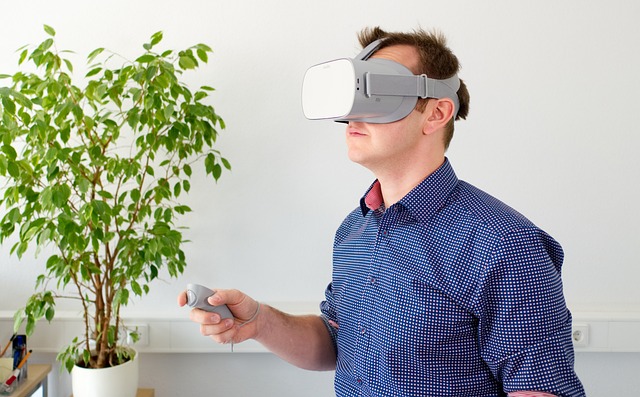
Virtual Reality is a technology that immerses users in a fully digital environment, completely separating them from the physical world. By wearing a VR headset, users are transported to a simulated environment where they can experience a sense of presence and interact with objects and surroundings. The goal of VR is to create an illusion of reality so convincing that the brain accepts the digital world as real.
Key components of a VR system include:
Headsets: These devices cover the user's eyes and sometimes ears to block out the physical environment and provide visual and auditory stimuli.
Motion Tracking: Sensors and cameras track the user's head and body movements, allowing them to navigate and interact within the virtual space.
Controllers: These handheld devices enable users to manipulate and interact with objects in the virtual world.
Computing Power: VR requires powerful computers or gaming consoles to render the complex 3D environments in real-time.
Augmented Reality (AR):
Augmented Reality blends digital elements with the real world. Unlike VR, AR does not isolate users from their physical surroundings; instead, it enhances their environment by overlaying digital information, objects, or interactions onto the real world. AR can be experienced through various devices, such as smartphones, tablets, smart glasses, and heads-up displays.
Key features of AR include:
Digital Overlays: AR adds digital information, such as graphics, text, or animations, to the real world, enhancing the user's perception and understanding of their surroundings.
Contextual Awareness: AR systems use sensors, cameras, and GPS to understand the user's environment and provide relevant and context-sensitive information.
Interaction: Users can interact with the digital elements in their environment, allowing for a seamless blend of real-world and digital experiences.
Applications: AR has diverse applications, from navigation and gaming to education, retail, and industrial training.
Use Cases:
Both VR and AR have numerous practical applications:
Entertainment: VR provides immersive gaming experiences, while AR enhances interactive storytelling and entertainment.
Education: Both technologies offer engaging ways to learn complex subjects by visualizing abstract concepts or historical events.
Healthcare: Medical professionals use VR for simulations, surgical training, and therapy, while AR aids in visualization during surgeries.
Architecture and Design: VR enables architects to walk through virtual building models, while AR helps visualize finished structures within real environments.
Retail: AR enhances shopping experiences by allowing customers to virtually try on products before making a purchase.
Manufacturing and Training: AR assists in assembly line tasks and training by providing real-time instructions and guidance.
In conclusion, Virtual Reality and Augmented Reality are rapidly evolving technologies that offer exciting possibilities to create immersive experiences, revolutionize industries, and bridge the gap between the physical and digital worlds. As these technologies continue to develop, they are likely to reshape how we perceive, interact with, and benefit from the digital realities they offer.
Comments (0)
Intro to VR - AR: Understanding the Digital Realities.